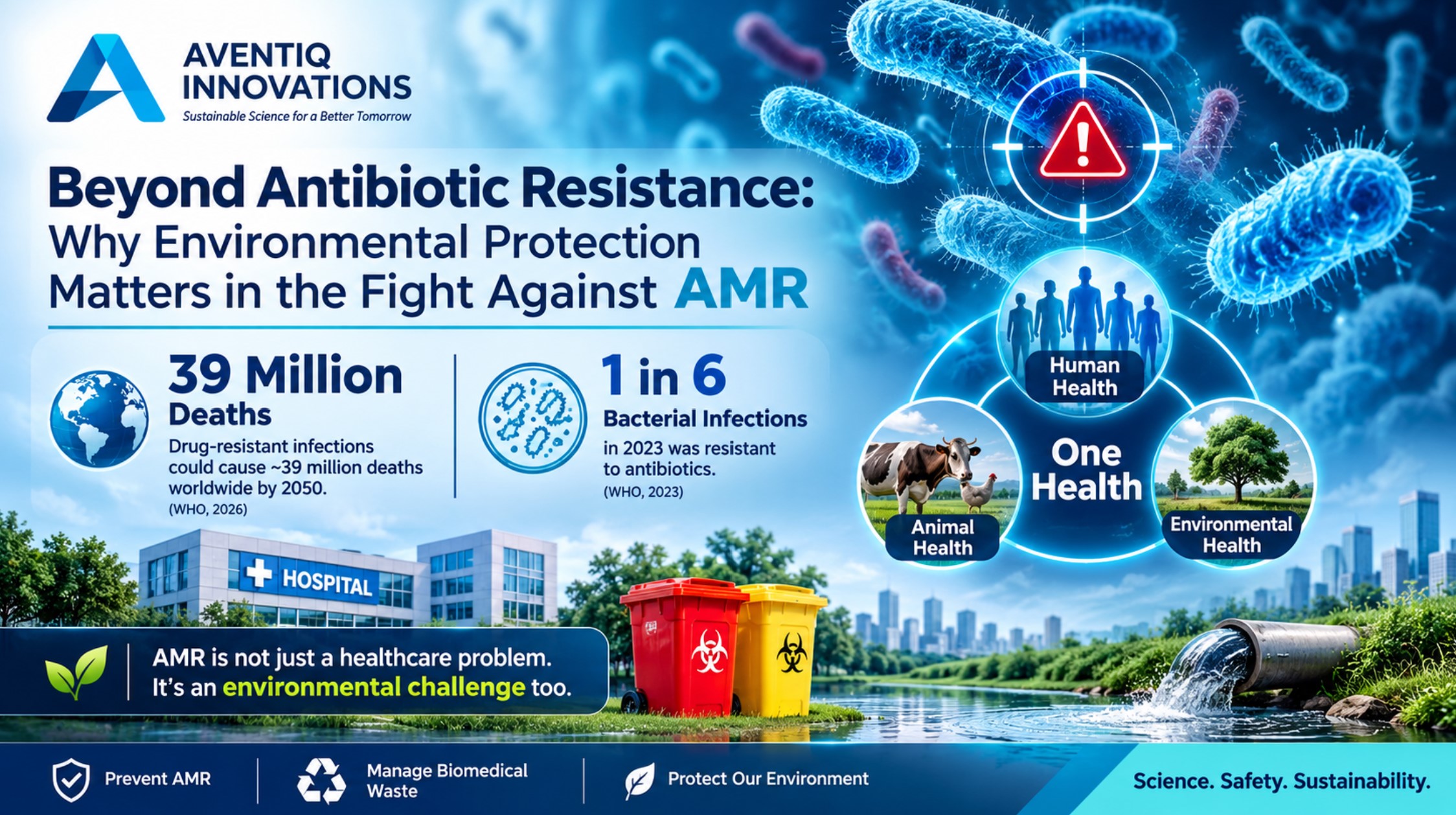
A Global Health Warning We Cannot Ignore
Modern medicine has transformed healthcare. Antibiotics have made once life-threatening infections treatable, enabled complex surgical procedures and improved survival across generations.
However, the effectiveness of these medicines is increasingly under threat.
On 16 November 2026, the World Health Organization (WHO) renewed its warning about antimicrobial resistance (AMR), with Al Jazeera reporting that drug-resistant infections could contribute to approximately 39 million deaths between 2025 and 2050.
The scale of the challenge is already evident. WHO surveillance data indicate that approximately one in every six laboratory-confirmed bacterial infections worldwide in 2023 was resistant to antibiotics used for treatment.
These figures raise an important question:
Are we doing enough to prevent the conditions that allow antimicrobial resistance to develop and spread?
While antibiotic stewardship, improved diagnostics and the development of new medicines remain essential, another dimension deserves equal attention: the environment.
AMR is not exclusively a clinical challenge. It is also a public-health, sanitation, wastewater and environmental management challenge.
1. Understanding Antimicrobial Resistance
Antimicrobial resistance occurs when microorganisms such as bacteria, viruses, fungi and parasites evolve mechanisms that allow them to survive medicines designed to control or eliminate them.
When resistance develops, infections can become increasingly difficult to treat. Patients may require alternative medicines, longer treatment periods and more complex clinical interventions.
The major contributing factors include:
-
Inappropriate and excessive use of antimicrobial medicines.
-
Inadequate infection prevention and control.
-
Limited access to timely and accurate diagnostic testing.
-
Poor sanitation and hygiene infrastructure.
-
Environmental exposure to antimicrobial residues and resistant microorganisms.
-
Inadequate management of healthcare and pharmaceutical waste streams.
AMR develops through biological processes, but human activities can influence the conditions under which resistance emerges, persists and spreads.
Understanding these interconnected factors is essential to building effective prevention strategies.
2. The Environmental Dimension of AMR: An Often Overlooked Risk
One of the most important developments in global AMR discussions is the growing recognition of environmental pathways.
According to the WHO, untreated or inadequately managed wastewater and sludge can act as reservoirs for antimicrobial substances and resistant pathogens.
Several environmental pathways require attention.
Healthcare wastewater
Hospitals and healthcare facilities generate wastewater that may contain pharmaceutical residues, microorganisms and other biological contaminants. Appropriate collection, treatment and monitoring are important for reducing environmental risks.
Pharmaceutical manufacturing effluents
Effluents from pharmaceutical production may contain antimicrobial residues. If inadequately controlled, these discharges can contribute to environmental contamination and conditions that favour resistance selection.
Biomedical waste
Healthcare waste may contain infectious materials and other potentially hazardous components. Inadequate segregation, handling and treatment can increase exposure risks and compromise infection prevention systems.
Wastewater treatment and environmental discharge
Conventional wastewater treatment does not necessarily eliminate every antimicrobial residue, resistant microorganism or resistance gene. Treatment performance, discharge quality and environmental monitoring therefore matter.
These pathways demonstrate why environmental management must form part of a comprehensive AMR response.
Importantly, biomedical solid waste treatment and wastewater treatment address different waste streams. Both require appropriate, independently designed management systems.
3. Why the One Health Approach Is Essential
The One Health approach recognises that human health, animal health and environmental health are interconnected.
Antimicrobial-resistant microorganisms and resistance genes can move between people, animals and environmental systems through multiple pathways.
For example:
-
Inadequate sanitation can contribute to the contamination of water and soil.
-
Agricultural and animal production systems can contribute antimicrobial residues and resistant microorganisms to the environment.
-
Healthcare and pharmaceutical waste streams require appropriate treatment and management.
-
Contaminated water systems can provide pathways for environmental exposure.
Addressing AMR therefore requires coordinated action across healthcare, agriculture, pharmaceutical manufacturing, sanitation and environmental management.
No individual institution or technology can address the entire problem.
A successful One Health strategy must combine responsible antimicrobial use, vaccination, diagnostics, infection prevention, safe sanitation, wastewater management and environmental surveillance.
4. India's Healthcare Infrastructure: The Need for Better Prevention Systems
India's growing healthcare sector makes effective biomedical waste management an increasingly important responsibility.
Hospitals, diagnostic laboratories, research institutions and pharmaceutical manufacturers generate different categories of waste that require appropriate segregation, treatment, documentation and disposal.
The Biomedical Waste Management Rules, 2016, and subsequent amendments establish the regulatory framework for biomedical waste management in India.
However, effective implementation requires more than regulatory awareness.
Healthcare facilities need:
Reliable treatment infrastructure: Appropriate technologies and operating procedures suited to different categories of biomedical waste.
Point-of-generation management: Effective segregation and suitable pre-treatment practices where applicable.
Operational accountability: Clear records of waste generation, handling, treatment and disposal.
Digital documentation: Reliable reporting and audit trails that support regulatory oversight.
Environmental responsibility: Appropriate wastewater management and monitoring of relevant discharge pathways.
Strengthening these systems can improve healthcare safety and contribute to broader environmental protection objectives.
5. Technology and Innovation: Moving Towards Safer Healthcare Systems
Addressing healthcare waste challenges requires a combination of scientific research, engineering, appropriate treatment technologies and reliable digital systems.
At Aventiq Innovations, our focus is on developing technology-led initiatives that support safer biomedical waste management and more accountable healthcare infrastructure.
Two initiatives reflect this direction.
ABIOT-E-SAFE™: Rethinking Biomedical Waste Pre-Treatment
ABIOT-E-SAFE™ is an indigenous biomedical waste pre-treatment technology initiative currently under development.
The concept focuses on point-of-generation treatment within healthcare facilities, integrating proprietary oxidative chemical technology and UV-based treatment approaches.
Its objective is to support safer handling of biomedical waste through an integrated treatment approach.
The underlying philosophy is straightforward:
Healthcare waste management should begin with responsible action at the point where waste is generated.
By exploring decentralised pre-treatment approaches, ABIOT-E-SAFE™ aims to contribute to the development of more practical and safety-oriented healthcare waste management infrastructure.
SmartTrace™: Bringing Digital Accountability to Biomedical Waste Management
Physical waste treatment is only one part of effective waste management. Documentation, monitoring and traceability are equally important.
SmartTrace™ is a digital initiative designed to support biomedical waste reporting, documentation and operational visibility.
Its intended capabilities include:
-
Structured digital workflows for Form I–V reporting.
-
Timestamp-based documentation.
-
Digital audit trails.
-
Real-time reporting and data visibility.
-
Analytics to support operational monitoring.
By bringing waste-management information into a structured digital environment, SmartTrace™ aims to support better documentation, accountability and regulatory reporting.
Together, these initiatives represent two complementary aspects of responsible healthcare infrastructure: appropriate physical waste management and stronger digital oversight.
6. From Regulatory Compliance to Environmental Responsibility
Biomedical waste management should not be viewed simply as a regulatory obligation.
It is an essential part of healthcare safety, occupational protection and environmental responsibility.
Organisations need to move beyond a compliance-only mindset and develop systems that prioritise:
-
Prevention of avoidable infections.
-
Proper segregation and containment of healthcare waste.
-
Appropriate treatment based on waste classification.
-
Safe wastewater and effluent management.
-
Reliable documentation and traceability.
-
Continuous operational monitoring and improvement.
For the pharmaceutical and healthcare industries, this also means recognising the environmental implications of production, consumption and disposal throughout the product lifecycle.
A stronger prevention-focused approach can help build healthcare systems that are safer, more accountable and environmentally responsible.
7. The Road Ahead: Innovation Must Be Part of the AMR Conversation
The global AMR challenge requires coordinated action from governments, healthcare institutions, pharmaceutical manufacturers, researchers, technology developers and environmental organisations.
Investment in new medicines and diagnostics remains essential. However, prevention and environmental management must not be treated as secondary priorities.
India has an opportunity to strengthen its healthcare infrastructure through indigenous technology development, improved waste-management practices, digital monitoring and stronger environmental governance.
At Aventiq Innovations, we believe that technology should address real operational challenges while contributing to broader public-health and sustainability objectives.
Our work reflects a commitment to connecting scientific innovation with practical healthcare and environmental needs.
Conclusion: Protecting Human Health Begins with a Broader View of Prevention
Antimicrobial resistance reminds us that the health of people, animals and the environment cannot be considered in isolation.
The future of effective healthcare depends not only on the medicines we develop, but also on the systems we build to prevent infections, manage waste responsibly and protect the environment.
Biomedical waste management alone cannot solve AMR. However, it is an important part of the wider prevention and environmental protection framework.
The opportunity lies in combining science, responsible infrastructure, digital accountability and continuous innovation.
At Aventiq Innovations, we believe that safer healthcare and a healthier environment must advance together.
Science. Safety. Sustainability.
